Project Overview
This portfolio represents strategic involvement in the design and development of critical components enabling the deployment of robust, high-performance 5G networks. Key focus areas included innovative solutions for edge aggregation, unified Radio Access Network (RAN) architectures, and intelligent optical transport systems optimized for 5G requirements.
The Challenge
Deploying 5G networks presented significant technical hurdles compared to previous generations. Operators needed solutions to address:
- Increased Edge Complexity: The need for efficient traffic aggregation and processing closer to the user at cell sites.
- RAN Flexibility & Scalability: Moving towards more flexible and disaggregated RAN architectures (Distributed Units - DU, Centralized Units - CU) requiring optimized integration.
- Stringent Transport Requirements: Demands for significantly higher bandwidth, lower latency, and precise synchronization across fronthaul, midhaul, and backhaul segments.
- Operational Efficiency: Managing increasingly complex networks while controlling CapEx and OpEx.
- Diverse Service Support: Supporting varied performance requirements for eMBB, URLLC, and mMTC use cases simultaneously.
Key Solution Areas Developed
Led R&D efforts focusing on several critical components within the 5G ecosystem:
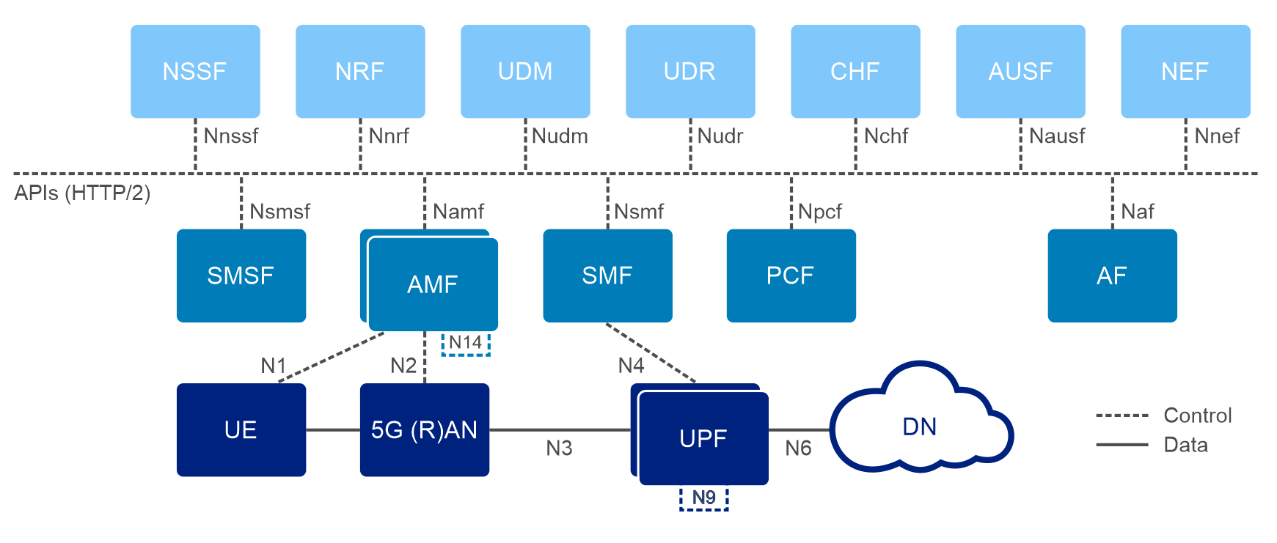 Fig 1: Conceptual overview of key 5G solution components.
1. 5G Edge Aggregation Systems (DCSG)
Designed Disaggregated Cell Site Gateway (DCSG) solutions to efficiently aggregate data traffic at the network edge, providing:
- High-density interface support for fronthaul (e.g., eCPRI), midhaul, and backhaul connectivity.
- Advanced traffic management and QoS capabilities for prioritizing diverse 5G traffic types.
- Precise timing and synchronization distribution (PTP/SyncE) critical for RAN coordination.
- An integrated platform potentially supporting edge computing applications (MEC).
2. Unified & Integrated DU/CU Solutions
Architected innovative approaches for deploying and managing Distributed Units (DU) and Centralized Units (CU) within the 5G RAN:
- Flexible functional splits allowing dynamic allocation of processing tasks between DU and CU based on network conditions and application requirements.
- Integrated resource management providing a unified view and control over pooled compute resources for CU deployments.
- Enhanced coordination protocols enabling tighter integration of radio resource management functions across multiple DUs/CUs.
- Cloud-native design principles leveraging containerization and microservices for scalability and resilience.
3. AI-Integrated Optical Transmission for 5G
Applied artificial intelligence and machine learning techniques to optimize optical transport networks specifically for 5G demands:
- Automated real-time optimization of optical transmission parameters (e.g., modulation format, power levels) based on network conditions.
- Predictive maintenance algorithms analyzing optical performance data to anticipate potential failures and schedule proactive interventions.
- Intelligent, dynamic allocation of optical network capacity based on predicted traffic patterns and slice requirements.
- Enhanced spectral efficiency techniques maximizing the utilization of available fiber spectrum.
Implementation Benefits & Outcomes
These developed solutions aimed to provide significant advantages for network operators deploying 5G:
- Reduced Total Cost of Ownership (TCO): Through disaggregation, optimized resource utilization, and automation.
- Enhanced Network Performance: Lower latency, higher throughput, and improved reliability meeting 5G standards.
- Increased Agility & Flexibility: Enabling faster service rollout and adaptation to changing market demands through software-defined principles.
- Operational Simplification: Unified management interfaces and AI-driven automation reducing complexity.
- Future-Proof Architecture: Building scalable platforms ready for network evolution and new service introductions (e.g., Private 5G, advanced IoT).
This portfolio represents a forward-looking approach to building the foundational infrastructure required for the success of 5G and future wireless generations.