In today's hyper-connected world, the data network is the critical backbone for enterprises and service providers alike. My expertise lies in architecting, managing, and optimizing these complex ecosystems, encompassing robust network management systems, cutting-edge transport and switching technologies, and the innovative frameworks shaping the future of networking.
Network Management & Operations Support
Effective network management is crucial for ensuring availability, performance, and operational efficiency. I have led the development of comprehensive management systems providing end-to-end visibility and control across diverse network environments.
Key Areas of Development:
- Telecom Network Management Systems (TMNS): Designing centralized platforms aligned with TMN principles for monitoring and controlling large-scale telecom infrastructure. Features included real-time topology visualization, multi-vendor device integration, automated fault correlation (root cause analysis), performance metrics aggregation, and configuration management (backup/restore).
- Data Network NMS: Building Network Management Systems tailored for enterprise and service provider data networks, incorporating auto-discovery and topology mapping, real-time performance monitoring (SNMP, NetFlow), configuration management tools, threshold-based alerting, and historical data analysis for capacity planning.
- Operations & Business Support Systems (OSS/BSS): Developing integrated OSS/BSS solutions bridging network operations with business processes. This included modules for service fulfillment and automated provisioning, network inventory management, fault and performance monitoring linkage to service impact, CRM integration, and foundational elements for billing and revenue assurance.
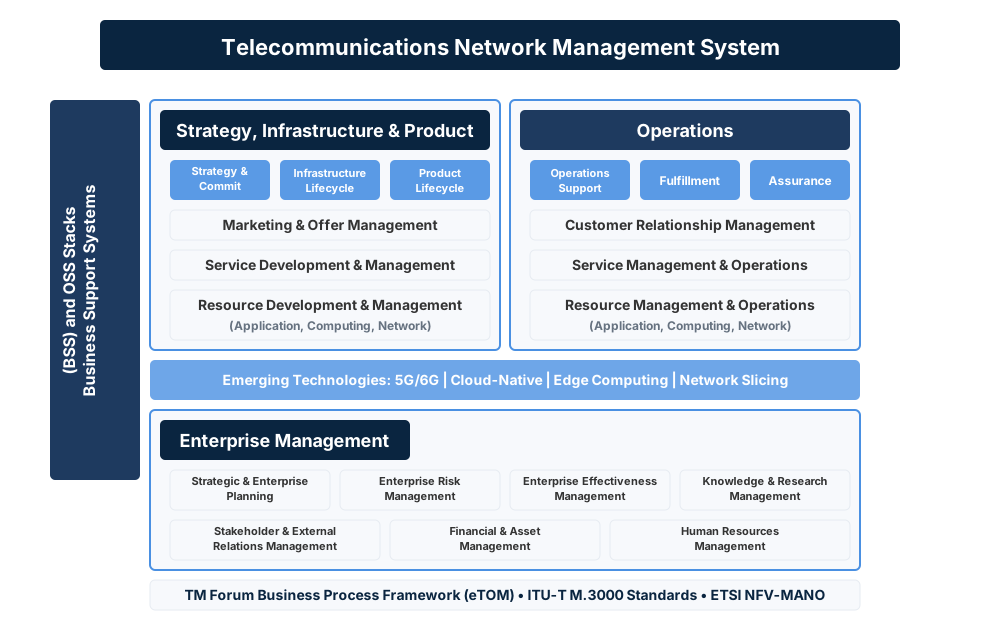 Fig 1: Modern TNMS Building Blocks
These systems empowered operations teams with enhanced visibility, proactive management capabilities, and streamlined workflows, ultimately improving network reliability and reducing operational costs.
Advanced Transport & Switching Solutions
Meeting the exponential growth in data traffic requires sophisticated transport and switching infrastructure. My experience covers the design and implementation of high-capacity optical and packet networks capable of handling demanding modern applications.
Key Areas of Development:
- Optical & Packet Transport Networks (OTN/PTN): Engineering solutions leveraging OTN for high-capacity, transparent transport and PTN (MPLS-TP, PBB-TE) for efficient, connection-oriented packet transport. Focused on scalability, resilience (protection switching), and integration with control planes for dynamic provisioning.
- Ultra-High Capacity L2/L3 Switching: Leading the development of carrier-grade and data center switches featuring non-blocking architectures, deep packet buffers, advanced QoS mechanisms, and support for comprehensive Layer 2 (VLAN, STP variants, LAG) and Layer 3 (OSPF, BGP, VRF) protocols. Emphasis on performance, density, and power efficiency.
- Data Center Network Integration: Designing network architectures specifically for data centers, incorporating technologies like VXLAN for network virtualization, leaf-spine topologies for predictable latency and scalability, and integration with compute and storage orchestration systems.
These solutions formed the high-performance foundation for service provider backbones, enterprise cores, and large-scale data centers, ensuring efficient and reliable data flow.
Next-Generation Networking Technologies
Staying ahead requires embracing network paradigms that offer greater flexibility, programmability, and service differentiation. I have been involved in pioneering work on software-defined and sliced network architectures.
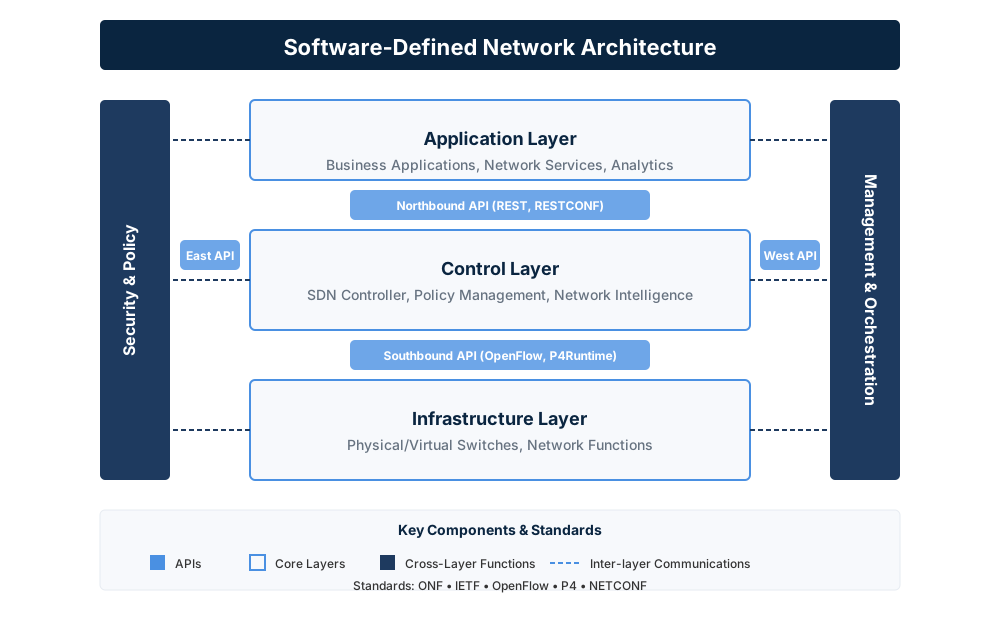 Fig 2: Visualization of a flexible, software-defined network architecture.
Key Areas of Development:
- Software-Defined Networking (SDN): Architecting and developing SDN solutions separating the control plane from the data plane. This included work on SDN controllers, southbound interfaces (like OpenFlow), northbound APIs for application integration, and network virtualization overlays, enabling centralized management and network programmability.
- Sliced Packet Networks (SPN): Spearheading the development of SPN technology, allowing the creation of multiple, isolated logical network slices over a shared physical infrastructure. This involved designing mechanisms for hard resource isolation (bandwidth, latency guarantees), slice-specific QoS treatment, and integration with orchestration systems for dynamic slice lifecycle management – crucial for 5G transport.
- 5G Transport Solutions: Applying expertise in PTN, SPN, and SDN to design optimized transport network solutions specifically addressing the diverse requirements of 5G use cases (eMBB, URLLC, mMTC), including support for fronthaul/midhaul/backhaul segments and precise timing/synchronization distribution.
These advancements provide the foundation for more agile, automated, and service-aware networks capable of supporting the demands of 5G, IoT, and cloud services.